
In our region there is a huge variety of cultures located in different places, mestizos and pure blood combined cultures and were giving place to one of its basic representatives as is the type of clothing that was held at that time and in that part of the country
the affection of the garment is represented in how many years the representative costume of the region has lasted
In Mexico there are many typical Mexican costumes and each one is made by hand with careful delicacy. And although the origin of some trousseau transport us to colonial times, such as Yucatan costume, there are others of much more recent creation, an example is that of Baja California. However, it does not matter how young or old these outfits are; each one carries elements representative of their state and of our country that make them unique in the world.
Aguascalientes
This state is named for the abundant springs of warm water that were during the Colony. His typical costume is called «Aguascalientes official representative suit», although now there are many others, thanks to the costume contests that exist in the National Fair of San Marcos.
The original costume design is by Jorge Campos Espino. To do this, Campos took as a model the costumes that both landowners and peasants wore at the beginning of the 20th century. It consists of a blouse with high neck, wide sleeves from the shoulders to the elbows and tight from the elbows to the wrists and wide skirt.
These suits stand out for the beautiful work of fraying and embroidery. On the skirt is usually embroidered by hand or machine, the «balustrade of the Garden of San Marcos.» The colors of the outfit may vary.
Mexico Unknown Archive
Typical costume of the state of Aguascalientes.
Baja California
This state was named -in 1952- as number 29 of Mexico. From this, the governor wanted Baja California to have a hymn, a shield and a suit that would identify the region. Thus, on March 4, 1994, a call was launched to choose the typical costume of the region.
26 costumes competed. Among them was the «Flower Cucapá», made by María de la Cruz Pulido Vera and was modeled by a young lady: Rosa María Rodríguez.
This typical Mexican dress consists of a dress with a round neck, short sleeves and a wide skirt. The whole dress has embroidered details such as cactus and fish.
ICBN
Typical costume of Baja California Sur.
Baja California Sur
The typical costume of Baja California del Sur, also known as the «Flor de Pitahaya» was created in 1951. This costume from Baja California Sur is characterized by being very white, except for part of the skirt. The back is composed of a white short-sleeved blouse. The neck is wide and protrudes from it a V-shaped fabric.
For its part, the wide skirt is red and is decorated by large white flowers linked by a network of beautiful cacti. In the lower part a white holly is distinguished.
Campeche
The origin of the Campeche regional dress dates back to the times of New Spain. The elements that make up this costume are of colonial and Mayan origin. The legend tells that the typical costume was born when the patrons gave their employees four times a year. These times were during the Carnival, the festivities of San Juan, San Román and La Purísima Concepción.
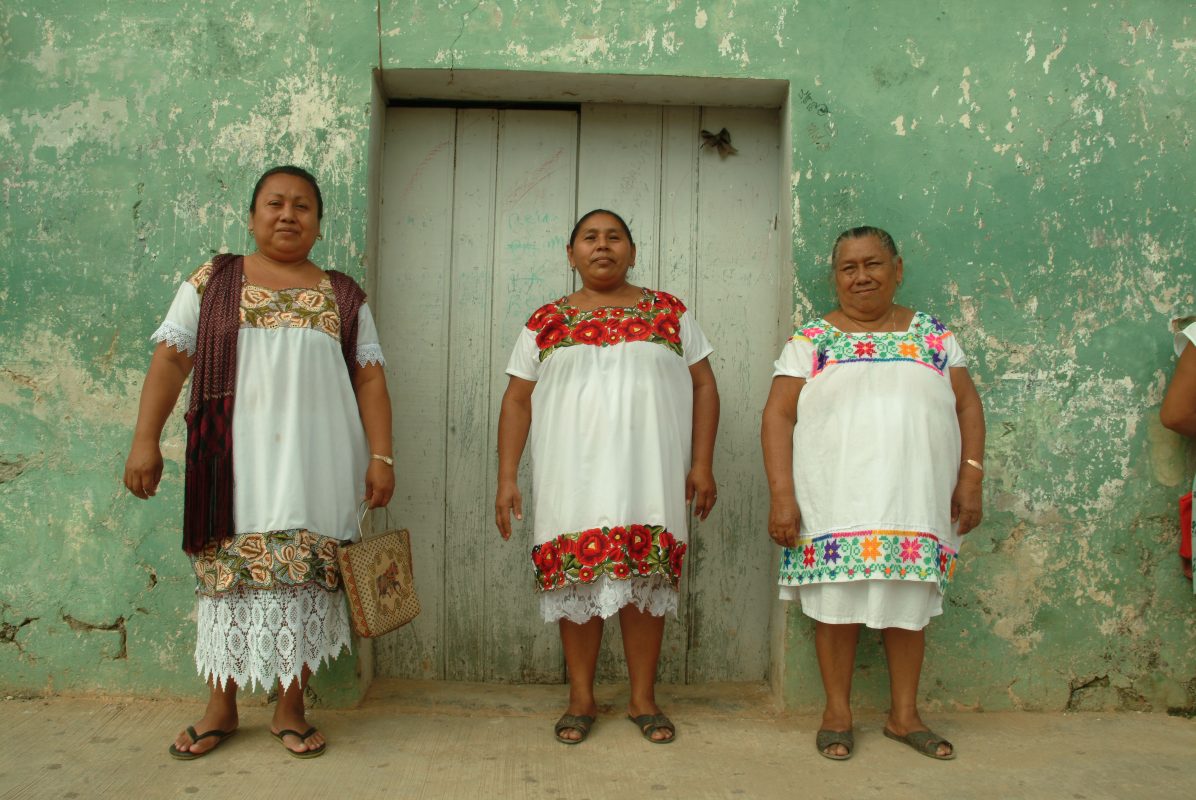
The costumes that the patrons gave were «huipiles» and skirts of calico or chintz. The blouses of the huipiles are square. Onion and pumpkin flowers are embroidered on the neck.
The skirt is under a white skirt or as it is commonly known: petticoat.
The complement of the attire was a scarf but now an overflow of «Santa Maria» is used.
Mexico Unknown Archive
Typical costume of Campeche.
Coahuila
Regarding the trousseau of the women of Coahuila, it is known that they are dressed in a wide skirt and very bright and clear tones such as yellow, green, purple, blue, and so on. Dresses are added details such as embroidery figures of plants of the region or distinctive elements.
The men’s suit consists of a denim shirt and denim pants.
Both men and women wear boots with engravings that represent the identity of their region.
Colima
In the state of Colima the typical costume may be due to one of the most practiced dances: that of conquest. This celebration is also known as the fiesta de; capes, malinches, Apaches or «the Virgin of Guadalupe».
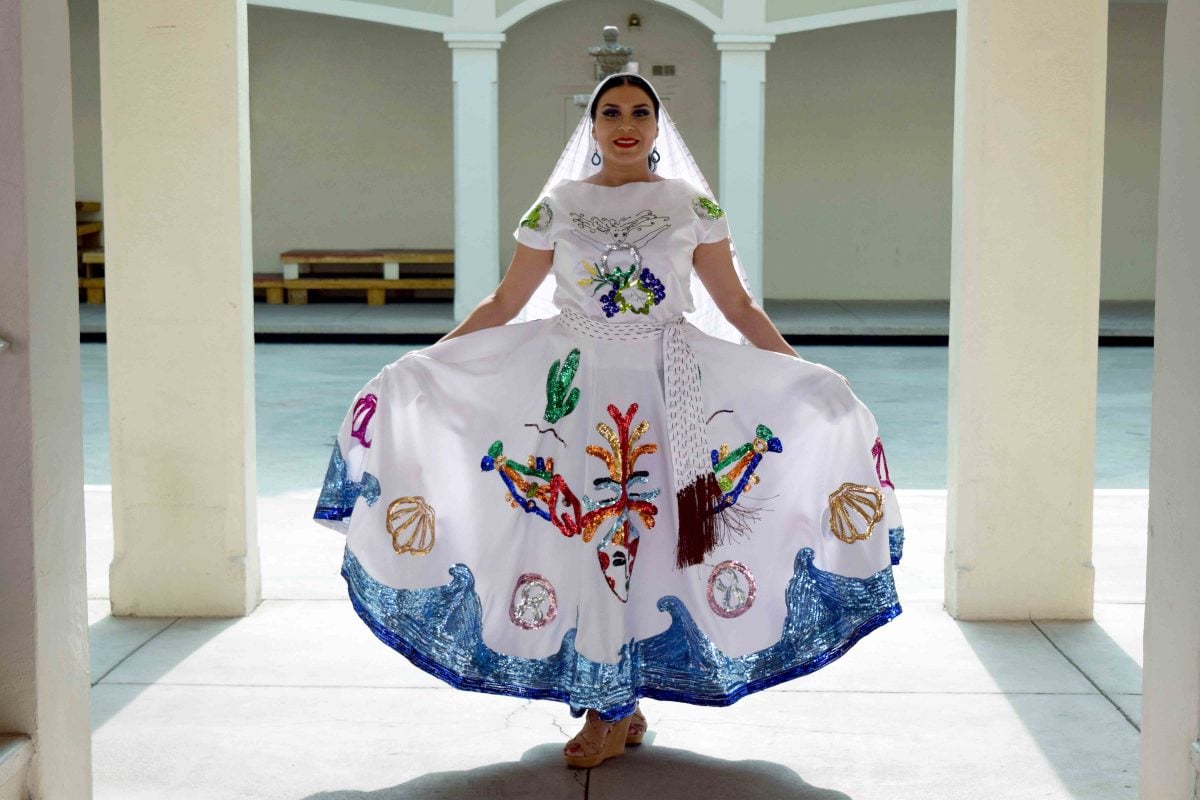
It is precisely during the novena of the Virgin of Guadalupe when the typical costume is worn. This consists of a beautiful white dress embroidered with «cross stitch». In the upper-frontal part, the image of the Virgin is embroidered. On the skirt flowers are embroidered.
To make the suit even more elegant, an embroidered veil can be added and the head covered with it.
Chiapas
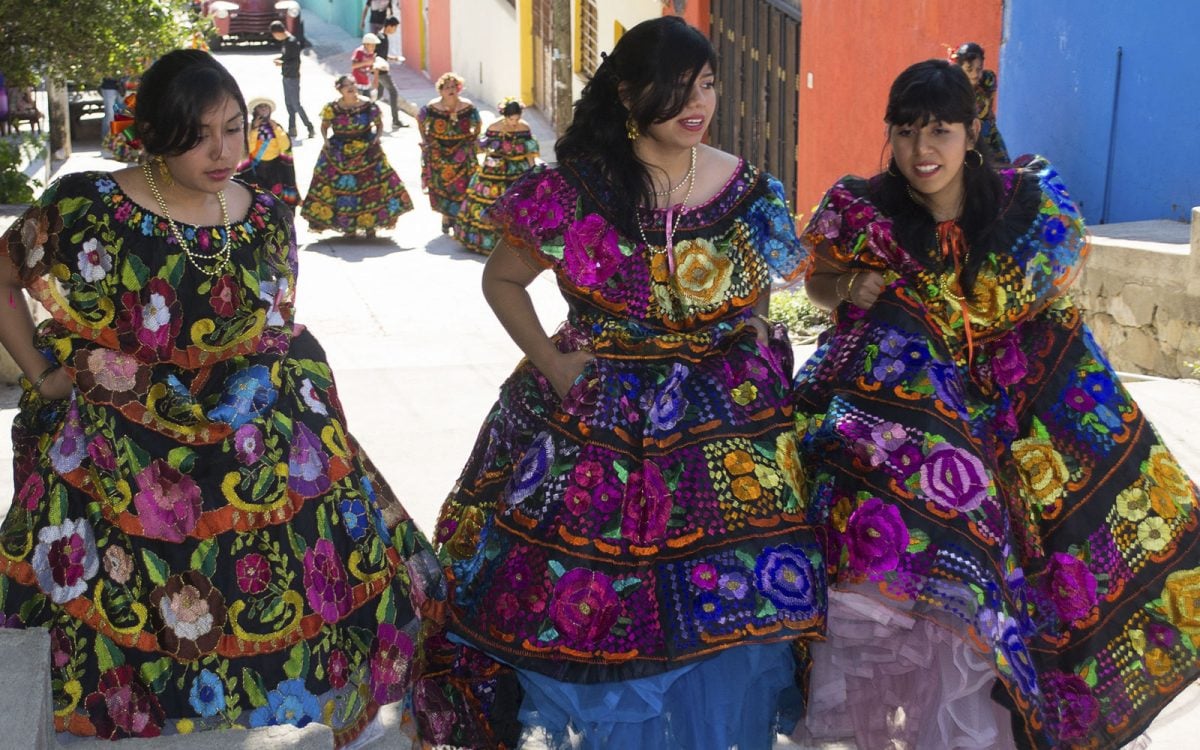
Undoubtedly, one of the most beautiful Mexican costumes is that of the Chiapanecas. This consists of an elegant black dress, upholstered with flowers that is like
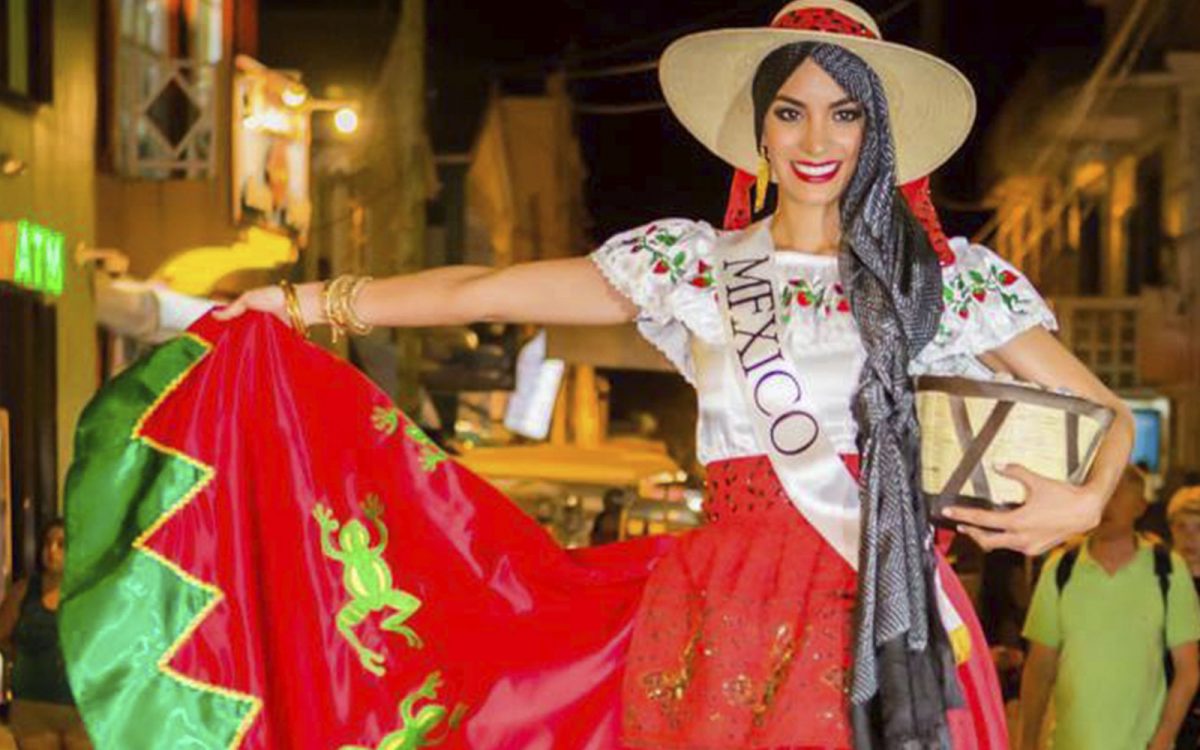
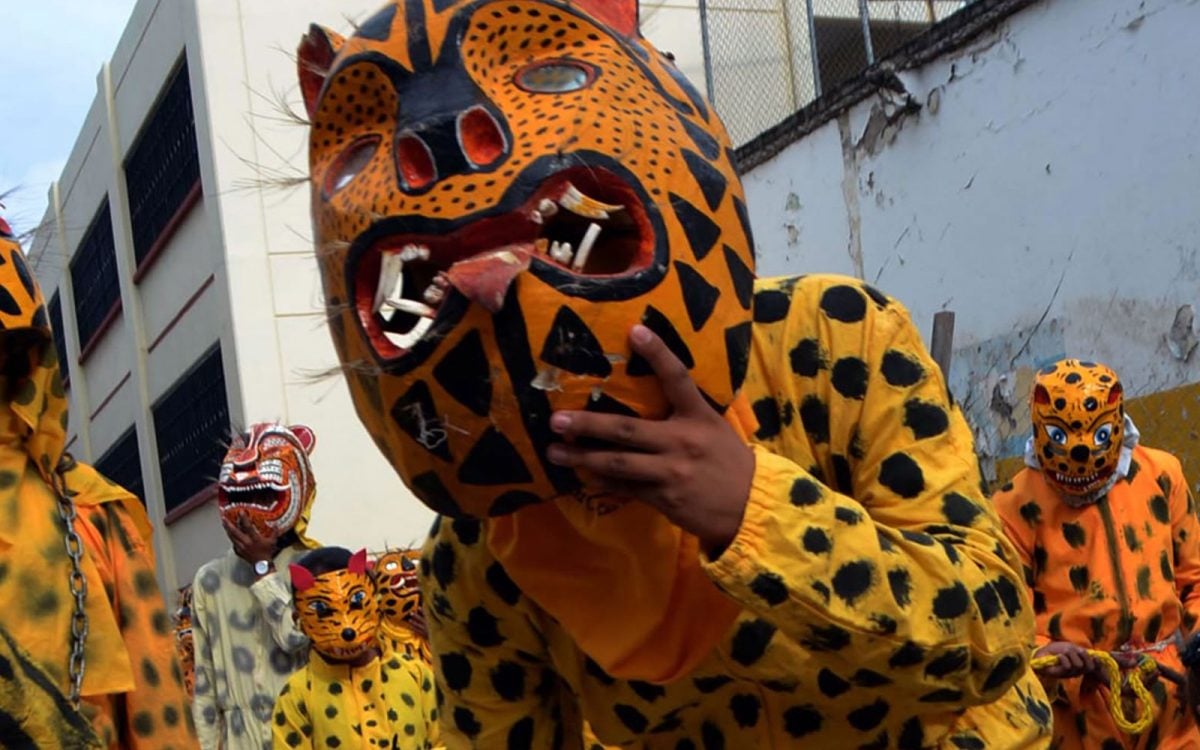
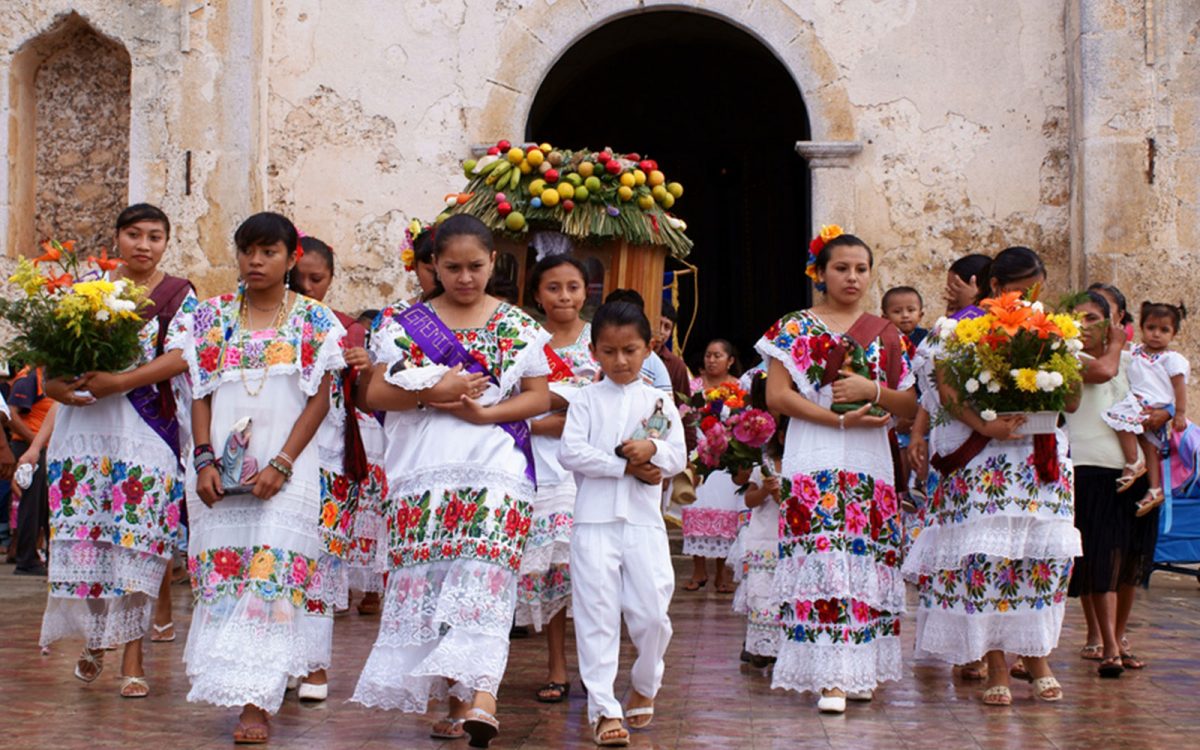
The meeting of mourning and the celebration of life that originated in the mid-twentieth century. Before having this deep color, the suit was white. It changed when a woman named Eloína Ríos Madrigal, wanted to transform it so she dyed the starch with black aniline. Then he cut it, ironed and embroidered with nuanced tones. From then on, the suit began to be used in black. It should be noted that the Chiapanecas costume is not the only one, there is also that of the Parachicos. This suit is composed of: black pants, white shirt, red sash, embroidered scarf, serape, a shawl over the head and tied around the neck and a pink mask. Nayeli Ramon Typical outfit of the state of Chiapas.City of MexicoThe typical costume of Women in Mexico City (formerly known as the Federal District), consists of a wide dress, square neckline and short sleeves. This dress is easy to recognize because it has the colors of the Flag of Mexico: green, white and red. These are distributed vertically so that they form a large flag. It is usual that the dress is accompanied by a shawl, also tricolor, and a broad hat similar to the one worn by the charros.GuanajuatoThe typical Guanajuato costume is known as the «Galereña» » The name is thanks to the Galerean women, named after having worked in the mines or «galleys». These women broke stones outside the mines. This in order to reduce the rocks to be able to process them more easily. The attire of the galereñas was transformed and adopted as a typical costume of the state. This costume was a dress composed of several pieces; a blanket skirt called Zagalejo, over a red flannel skirt and adorned with green triangles around the waist.José Luis Zapata Typical Costume of Guanajuato.GuerreroThe state of Guerrero is a rich place as far as typical Mexican costumes are concerned. In this place, each community has its own cultural structure. However, most of these entities still retain their typical clothes, which is why there are several. As an example of this variety we have the dress of the Amuzga woman and the suit worn by men during the «Tigrada de Chilapa» – celebrated party every August 15 in the central part of Guerrero in order to obtain fertility. The clothes of the Amuzga woman consists of a huipil. This huipil changes according to the events they wish to celebrate. The black huipiles, for example, are used in burials, day of the dead and during the «passion of Christ». On the other hand, cheerful tones are worn during the patron festivities of major importance. The tigrada trousseau consists of a full suit yellow and black spots or stripes. It is accompanied by a feline mask made of wood.Briselda de JesúsTraje de Guerrero, «La Tigrada» .YucatánDuring the colonial period, Fray Diego de Landa wrote in his book «Relacion de las cosas de Yucatán» that the women of that region were «Very honest in their suit», unlike those of other places, and that is that they wore fustian and doublet under the hipil, while those of other regions «did not bring more than a sack as a garment …». So far, the Yucatecan women’s costumes continue to be used and are known as hipiles or ternos – sets of 3 things. Although, it is worth mentioning that the suit is only used in parties of the dairy and weddings. The suit consists of the doublet, hipil and the fustian-in addition to closed slippers, jewelry such as filigree rosaries and a rebozo-The doublet is «a a square lapel twenty or more centimeters wide that is attached to the neck of the hipil. «The hipil, on the other hand, is a long sleeveless shirt, decorated with embroidered flowers and lace. The fustian is a half background that is worn under the hipil.The man’s suit consists of a straight and white pants, a white long-sleeved shirt and high neck and of course, a white hat or palmip jipi.Luis ArceoTraje typical of Yucatan

 ALEXIS ROLDAN